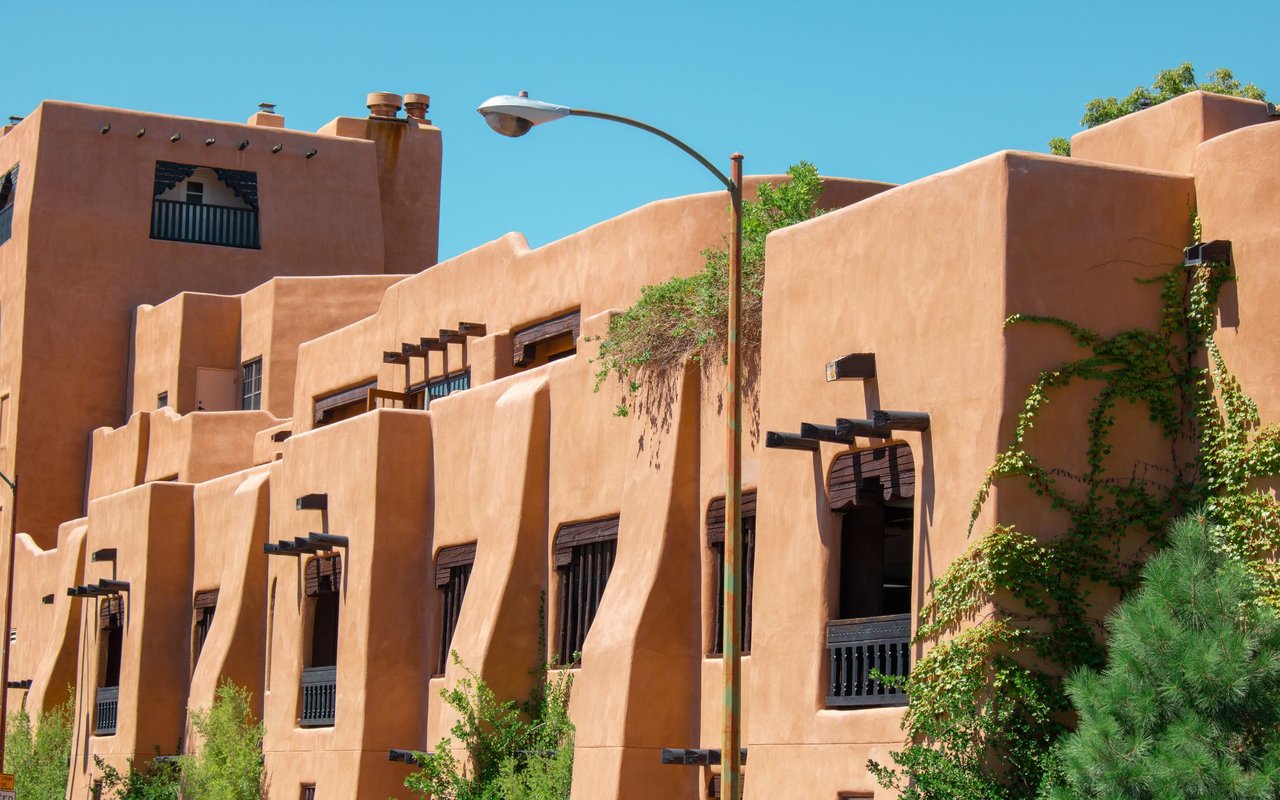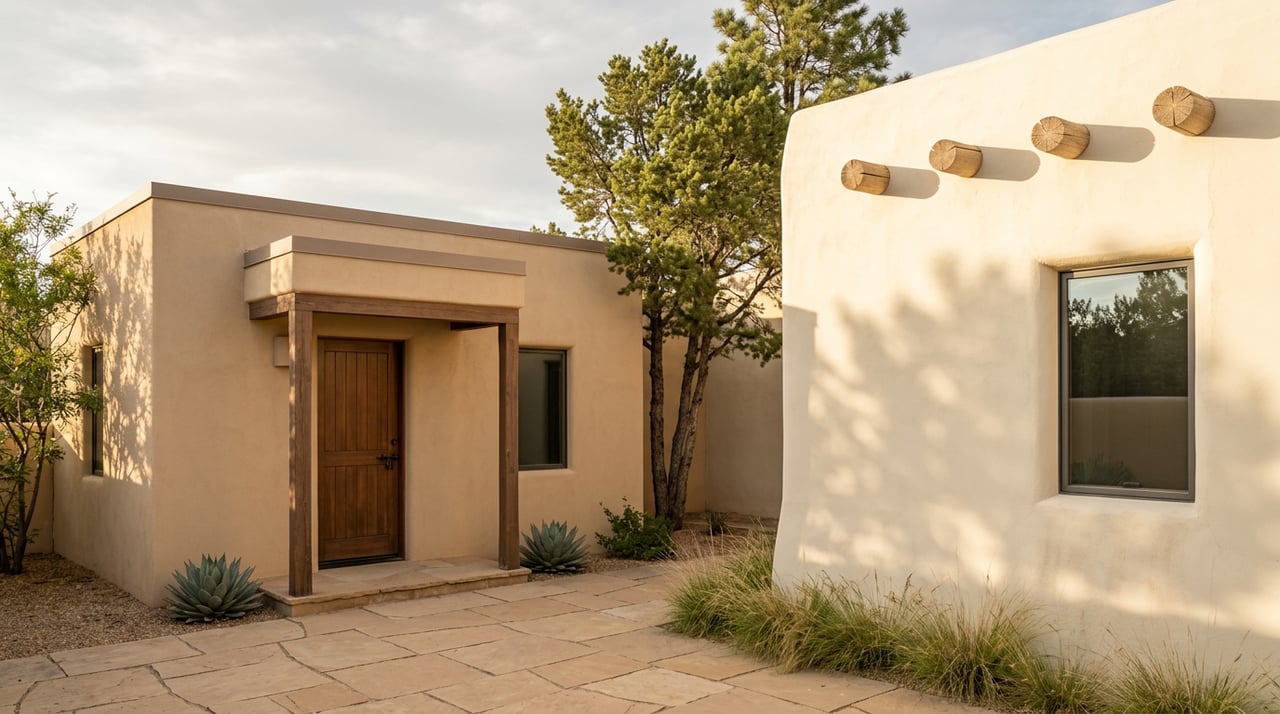
The pitch sounds airtight. A Santa Fe home with a casita costs more up front, but the guest house rents out and chips away at the mortgage. More house, more cash flow, better math. Two federal loan programs now let buyers count that rental income toward what they qualify for, which should make the case even stronger.
Except the way that income gets capped means the buyers who need the boost most often get the least of it. That is the part of the casita conversation that rarely makes it past the listing photo of the freestanding adobe with its own portal.
Why the Same Rent Helps Some Buyers More Than Others
Both FHA and Fannie Mae will let a lender count a share of casita rent toward a borrower's qualifying income, but neither program lets it count without limit. The cap is set as a percentage of your total qualifying income, not as a flat dollar figure, and that structural choice changes who benefits.
Picture two borrowers looking at the same casita renting for the same amount. One earns a comfortable salary and easily has room under the cap. The other earns less to start with, which means the ceiling on how much rental income can count sits lower in absolute dollars, even though the casita itself produces identical rent. The borrower with the smaller income gets less usable credit from the exact same guest house. The mortgage math built to help buyers stretch into a home with a casita ends up stretching furthest for buyers who needed the least help stretching in the first place.
For a first-time buyer weighing a Santa Fe home with a casita against a comparable home without one, that inversion is worth running before assuming the guest house pays for itself on paper.
Two Programs, Two Very Different Timelines
FHA got here first. Since a 2023 policy change, FHA-insured loans have allowed lenders to count 75 percent of existing ADU rent toward a borrower's effective income, capped at 30 percent of that total. Buyers planning to build a new casita through an FHA 203(k) rehabilitation loan can count 50 percent of projected rent under the same ceiling.
Fannie Mae took much longer. Conventional loans backed by Fannie Mae only gained an equivalent path on October 8, 2025, when the agency updated its Selling Guide, and the change did not reach automated underwriting until Desktop Underwriter version 12.1 rolled out the weekend of March 21, 2026. The rule only applies to a one-unit principal residence, only on a purchase or limited cash-out refinance, and only for one ADU even if a property happens to have more than one. Appraisers reviewing these files have flagged a related wrinkle: because ADU rent can now show up both in the borrower's qualifying income and in how the property itself is valued, there is real risk of double-counting the same income stream if the numbers are not handled carefully.
Practically, that means a buyer shopping with a conventional loan has only had this option for about five months. Plenty of loan officers, and more than a few agents, are still working from the pre-2025 assumption that a casita's rent simply does not count on a conventional file. It is worth asking directly which guideline your lender is actually using before you rule a property in or out based on old information.
What the City Actually Lets You Build
None of this financing math matters if the casita is not legal to begin with, and Santa Fe's zoning is more permissive here than most Southwest cities. Accessory dwelling units are allowed by right in most residential zoning districts under the city's land development code, whether attached, detached, or converted from an existing garage. That permissive stance is part of why casitas are such a familiar feature of Santa Fe's housing stock rather than a rare upgrade.
The size ceiling matters for financing math too. A legal casita has to stay smaller than the primary residence and generally tops out around 1,500 square feet, a figure the city has used elsewhere as the minimum footprint for a four-bedroom home under its affordable housing rules. A casita anywhere near that ceiling is producing meaningfully different rent potential, and a very different appraisal picture, than a 400 square foot studio conversion over a garage.
The Historic District Complication
Zoning by right does not mean construction by right everywhere in the city. Santa Fe has five historic districts, and a casita located inside one, including the district that covers much of the Historic East Side and the blocks around Canyon Road, cannot be built or exteriorally altered without review by the Historic Districts Review Board. The board looks at massing, materials, parapet height, and how a new structure reads against the existing streetscape, and it meets only twice a month. A modern stucco box with generous glazing that would be routine construction elsewhere in the city can require real design revision to clear that review.
For a buyer counting on ADU rental income to help qualify for a purchase, that timeline matters. A casita that needs to be built or substantially modified after closing is not producing rent on day one, and a historic district review adds weeks that a straightforward permit elsewhere in the city would not.
The Airbnb Assumption Doesn't Survive Contact With the Ordinance
Some buyers are not thinking about long-term rent at all. They are picturing the casita on a short-term platform, priced for weekend visitors during Indian Market or Fiestas. Santa Fe's short-term rental rules make that plan considerably narrower than it sounds.
The city's ordinance requires a Residential Short-Term Rental Permit for any unit rented under 30 days, and for a casita specifically, the owner has to actually live on-site, in either the main house or the accessory unit, to qualify. A casita on a property where the owner does not live is not eligible for a residential STR permit at all. Even with a permit, bookings in residential zones are capped to once in any seven-day period for most of the year, with that cap lifted between mid-November and mid-January to cover holiday travel.
Outside city limits, Santa Fe County has gone further. Following a county ordinance action, reported in February 2025, non-owner-occupied short-term rental permits are now capped at either 3 or 7 percent of a community's housing stock, depending on the area's existing rental density and character. The limits allow the number of permitted non-owner-occupied rentals to roughly double in most places, which sounds generous until you consider how few permits some communities started with.
If the pencil math on a casita purchase depends on running it as a short-term rental, confirming permit availability before the inspection contingency expires is not optional. It is the difference between a workable plan and a home that cannot produce the income the offer assumed.
The Question Worth Asking Before You Write an Offer
Every legal question above assumes the casita is actually permitted, and that assumption fails more often than buyers expect on older Santa Fe properties. A structure calling itself a casita in the listing sheet can fall into one of three very different categories, and the difference is not always visible from the street.
- Permitted. Built or converted with a city permit, inspected, and recorded as a legal accessory dwelling unit. This is the version that can be rented, financed, and appraised as a casita.
- Grandfathered. Predates current code and was approved under earlier rules. Often fine to keep as-is, but adding plumbing or expanding the footprint can trigger a full compliance review under today's standards.
- Unpermitted. Built or converted without ever going through the city process. These exist across older lots throughout Santa Fe. They may function perfectly well day to day, but they are not legally rentable, may not appraise as a casita at all, and can become an expensive problem the moment a lender, insurer, or future buyer asks for paperwork that does not exist.
Pulling the permit history is a request your agent or title company can make before you write an offer, and it is worth making early. If a casita turns out to be unpermitted, the cost of legalizing it, drawings, code upgrades, fees, belongs in the offer price, not discovered after closing.
A Few Questions Worth Settling Early
Does a casita automatically raise a home's appraised value in Santa Fe? Not automatically. Appraisers are now watching for double counting between a casita's rental income and its contribution to overall market value, so the same rent should not be inflating both numbers independently in a single file.
Can I count projected rent on a casita I haven't built yet? Sometimes, but at a lower rate. FHA's 203(k) program allows 50 percent of projected rent for a casita built through that specific rehabilitation loan, a lower share than the 75 percent used for an existing, already-rented unit.
Is a garage conversion automatically a legal casita? Only if it went through the permit process as one. A converted garage without its own permit, kitchen, and bath does not qualify as an accessory dwelling unit regardless of what a listing calls it, and cannot be financed or rented on that basis.
If you're weighing a casita-equipped listing against a comparable home without one, the math is rarely as simple as the square footage suggests. Destinee Tran works through permit history, financing rules, and zoning specifics with buyers across Santa Fe before an offer goes in, not after. Let's Connect.