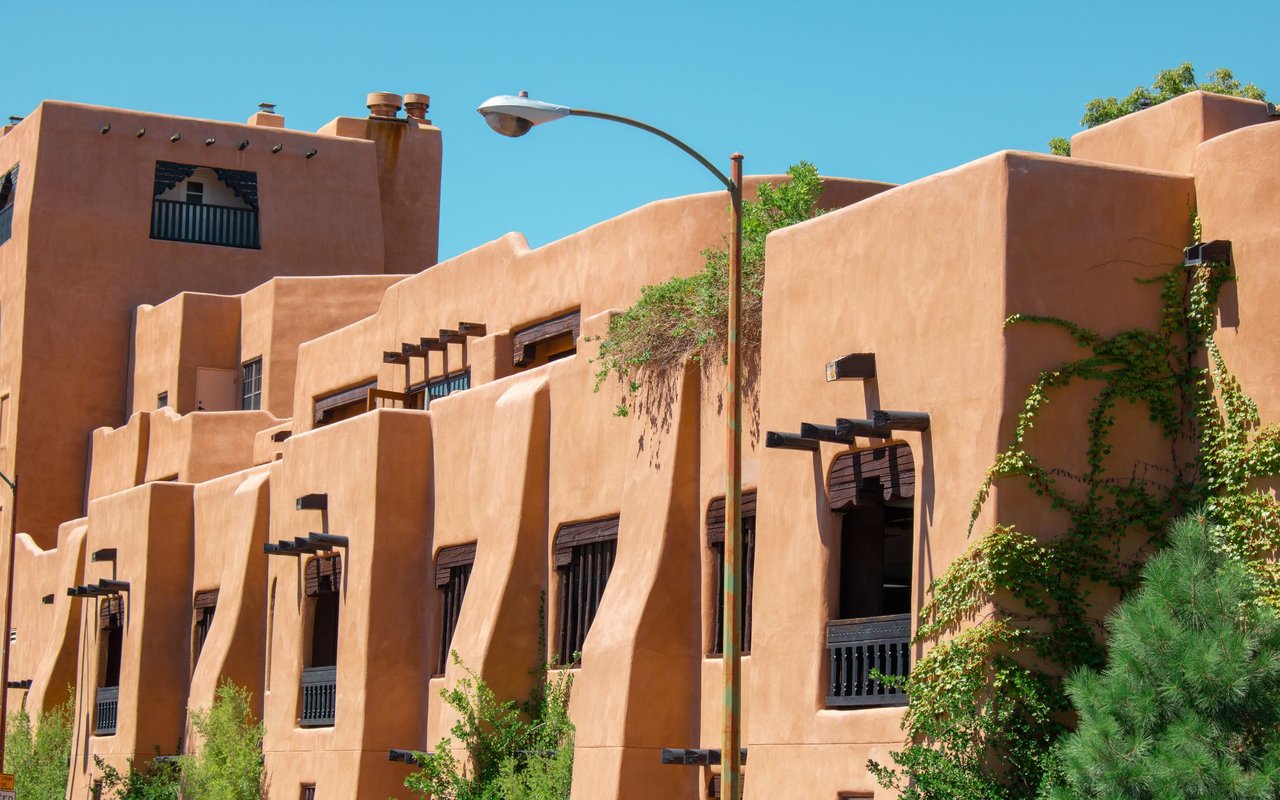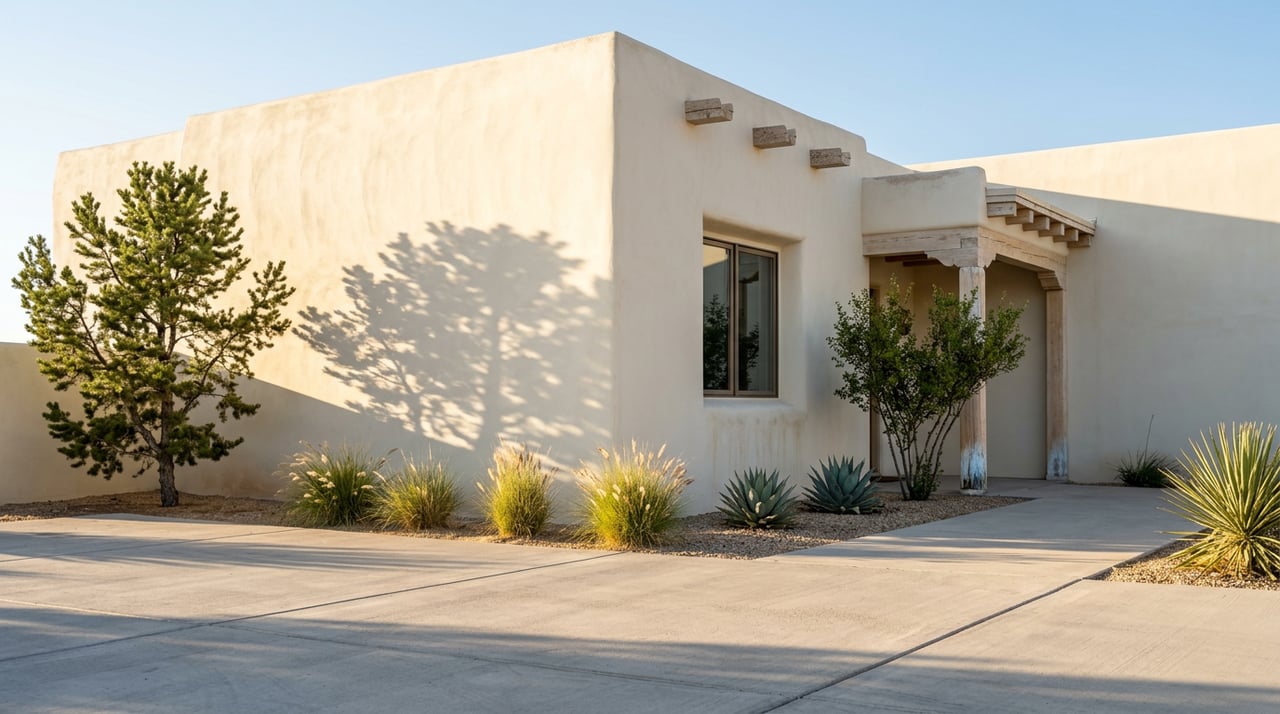
Say you've found the home. It's listed at $1.6 million, right around the trailing median for the community, and your lender has already confirmed you can carry that number comfortably. You assume the hard math is finished. Then your agent asks which estate the home sits in, and whether you plan to join the Club, and you realize you don't actually know what either answer costs.
That gap is the whole story in Las Campanas. The list price is the easiest number to find and the least useful one for predicting what you'll actually pay to live there.
One Price, Three Separate Bills
Las Campanas isn't governed the way most Santa Fe neighborhoods are. Ownership here runs through a layered structure: a master homeowners association that every owner pays into, a private country club that almost nobody is required to join, and, if you plan to build or remodel, a design review process with its own fee schedule. Each layer is billed separately, administered separately, and priced differently depending on where your lot sits and what you intend to do with it.
None of that shows up in a median sale price. A portal number tells you what homes have transacted for. It says nothing about the $4,000 range spread in annual dues between one estate and another, or the fact that the community's most exclusive amenity doesn't publish a price at all.
The HOA Number Depends on Which Estate You're Standing In
The 2026 assessment schedule for Las Campanas doesn't set one flat HOA fee. It sets a range, and the range is wide. Published examples run from around $4,296 a year for a home in Dayflower or Estates II up to roughly $16,092 a year in a Club Casitas scenario, payable in quarterly installments. On top of the base assessment, expect a $150 statement fee and a $150 transfer fee at closing.
That's nearly a four-to-one spread inside the same community, driven by which estate a property falls into and what beneficial or reserve components attach to that specific parcel.
Generic online estimates tend to flatten this. One buyer-facing guide pegs "mandatory Master Association fees" at roughly $3,800 to $4,000 a year, which is accurate for the low end of the range but understates the top end by nearly four times. If you're comparing Las Campanas to another Santa Fe luxury pocket using a single average HOA figure, you're likely comparing against the cheapest possible estate, not the one you're actually considering.
| Estate example | Approximate annual assessment |
|---|---|
| Dayflower / Estates II | ~$4,296 |
| Club Casitas scenario | ~$16,092 |
The takeaway isn't that Las Campanas dues are high or low. It's that "the HOA fee" isn't a single number you can look up once and apply to every listing. It's parcel-specific, and the only way to know your real figure is to request the current estoppel for that exact property before you write an offer.
The Club Doesn't Publish a Number, and That Isn't an Oversight
Here's where the layering gets genuinely strange, and where a buyer coming from a typical subdivision tends to get tripped up.
The Club at Las Campanas is entirely optional. You can buy a home, live there full time, and never join. Membership isn't tied to the deed, and there's no residency requirement to become a member either, since the Club accepts applicants from outside the community too. But if golf, the equestrian center, or the Hacienda Clubhouse are part of why you're looking here, you'll want a real number before you budget for it, and getting one is harder than it should be.
The Club's own site doesn't publish a current dues sheet. What exists instead is a scattered trail of estimates, each from a different year, each telling a different story. A membership document from 2015 listed an Equity Social initiation fee of $25,000 with $650 monthly dues, and an Equity Golf initiation fee of $40,000 with $1,250 monthly dues. A 2026 buyer's guide puts Equity Golf initiation closer to $150,000 and Social membership in the $75,000 to $100,000 range, with monthly dues layered on top and described as market-based and subject to change. A country club review site goes further still, citing unverified rumors of a $250,000 to $500,000 initiation fee and $20,000 to $35,000 in annual dues, while explicitly flagging those figures as estimates that shouldn't be relied on for a real decision.
Three sources, three eras, three wildly different answers. That's not sloppy research. It's what happens when an institution has no reason to make its pricing legible to the public.
Membership here is granted by invitation and board approval, not purchased off a rate card. An invitation-only club doesn't need to compete for applicants on price the way a public gym or a golf-course community with open enrollment would. The absence of a published number isn't a communication failure. It's consistent with how the Club has chosen to operate for years, and it means every estimate you find online, including the ones in this piece, should be treated as a starting point for a conversation with the Club's membership office, not a figure to underwrite against.
If access to the Club matters to your decision, the only reliable path is to request the current packet directly rather than budgeting off any secondhand number, including the older, published figures that are now more than a decade old.
If You're Planning to Build, There's a Fourth Bill
Buyers drawn to Las Campanas for a custom build or a major remodel run into one more layer: design review. The current fee schedule lists non-refundable design review fees of $2,500 each for conceptual, preliminary, and final new-residence review, which adds up to $7,500 before a shovel touches the ground, plus smaller fees for less extensive projects.
This isn't a rubber stamp. The association's rules extend to exterior colors, wall heights, landscaping changes, solar panels, and pools, and work completed without approval, or outside approved conditions, can draw fines of up to $10,000. If your plan includes any exterior change beyond routine maintenance, build the design review timeline and fee into your budget the same way you would a lender's closing costs.
What to Confirm Before You Write the Offer
The fix for all of this isn't complicated, but it does require asking specific questions rather than trusting an average:
- Which estate is the property in, and what does the current estoppel show for annual assessment, not a community-wide figure
- Is the home served by the Las Campanas Water Co-op or by city water, since Estates I and II are the exception and everyone else draws from the community system
- If Club access matters to you, request the Club's current fee packet directly rather than relying on any published estimate, including the ones cited here
- If you plan to build or remodel, review the design review manual and fee schedule with your contractor before finalizing your offer price
- Confirm the minimum lease term if a rental strategy is part of your plan, since Las Campanas requires leases of at least 30 consecutive days and doesn't permit short-term or bed-and-breakfast use
None of these questions will change whether Las Campanas is the right fit. They'll change whether the number you closed on is the number you're still comfortable with a year later.
The Median Was Never the Point
A $1.6 million median tells you what homes have sold for over the past year. It doesn't tell you which estate carries a four-figure HOA bill versus a five-figure one, and it can't tell you what the Club will actually charge you, because the Club hasn't told anyone that either. Treat the portal price as the opening line of the conversation, not the answer to it.
If you're comparing Las Campanas against another Santa Fe community and want the real, parcel-specific numbers before you fall in love with a listing, that's exactly the kind of homework worth doing with someone who already knows where to look. Destinee Tran works with buyers across Santa Fe and the surrounding communities to get past the median and into the actual math. Let's Connect.